

English version
I’ve always loved electronic music like techno, and I’ve been to various events in Spain and while traveling, but I feel like Japan’s rave scene has a unique vibe you can’t quite find anywhere else. Even people who aren’t particularly into techno can still enjoy some of the outdoor raves in Japan for its unique features, so I’d definitely want you to try once. In this post, I’ll share what makes Japan’s rave scene different, how to make the most of it, and highlight some festivals happening in 2025.
Are raves popular in Japan?
Genres like techno and trance have recently become quite mainstream abroad. At huge festivals like Tomorrowland, DJs such as Sara Landry and Amelie Lens, who play harder sounds, have been gaining huge popularity.
In Japan too, while it’s not as mainstream as in Europe, electronic music is definitely on the rise (though I don’t currently live in Japan, so I can’t claim to know firsthand). In clubs around Shibuya and Roppongi, you can find a wide range of events—house, techno, trance, psytrance, and more. There are also large-scale EDM festivals like Ultra Japan.
At the same time, smaller outdoor raves held at ski resorts or campgrounds from spring to autumn have a much more underground atmosphere—and this is where Japan’s rave scene feels especially unique.
What makes Japan’s rave scene unique?
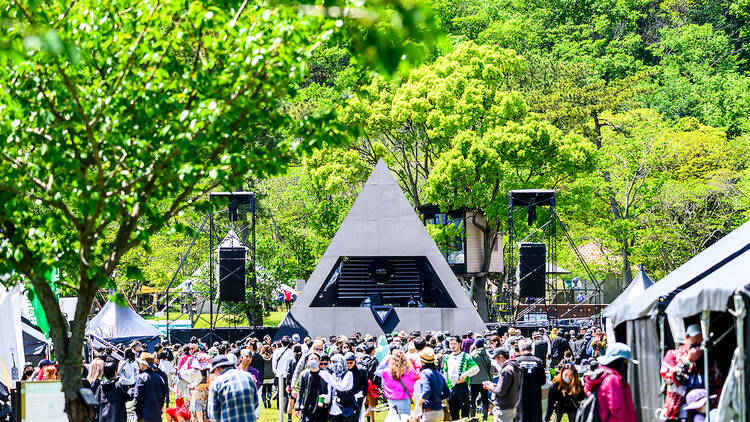
For example, outdoor raves in Japan often mix an underground vibe with something surprisingly wholesome: you’ll see children and even pets there. The music is niche—psytrance, acid techno, and so on (never pop or family-friendly tracks), yet there may be play areas for kids and activities designed for families.
And it’s not just about the music. You’ll find dancers, fire performances, handmade goods stalls, food vendors, saunas inside tents, yoga sessions, and even DJ sets paired with live Shibari art shows.
The best part, though, is being surrounded by stunning natural scenery. Many outdoor raves are held at ski resorts. During the day, you can swim in nearby rivers, and at night, fall asleep in your tent to the sounds of nature.
Most outdoor raves are relatively small, with just 2–4 stages. You can often walk from the campsite to the stage in under ten minutes. If the ski resort has hotels or indoor spaces, staying there is an option too.
How to enjoy
The level of DJs in Japan’s outdoor rave scene is incredibly high. Most focus on pure skill and artistry, the complete opposite of commercial-style sets. For true music lovers, it’s paradise. But even if you’re not into the music, the art, performances and camping in nature create an amazing experience.
Back when I went to raves in Japan, I was younger and too focused on dancing and music, usually exhausting myself by the final day. Looking back now, I wish I had taken more time to wander through nature, enjoy the art, and just relax. Sometimes I really miss the Japanese rave scene.